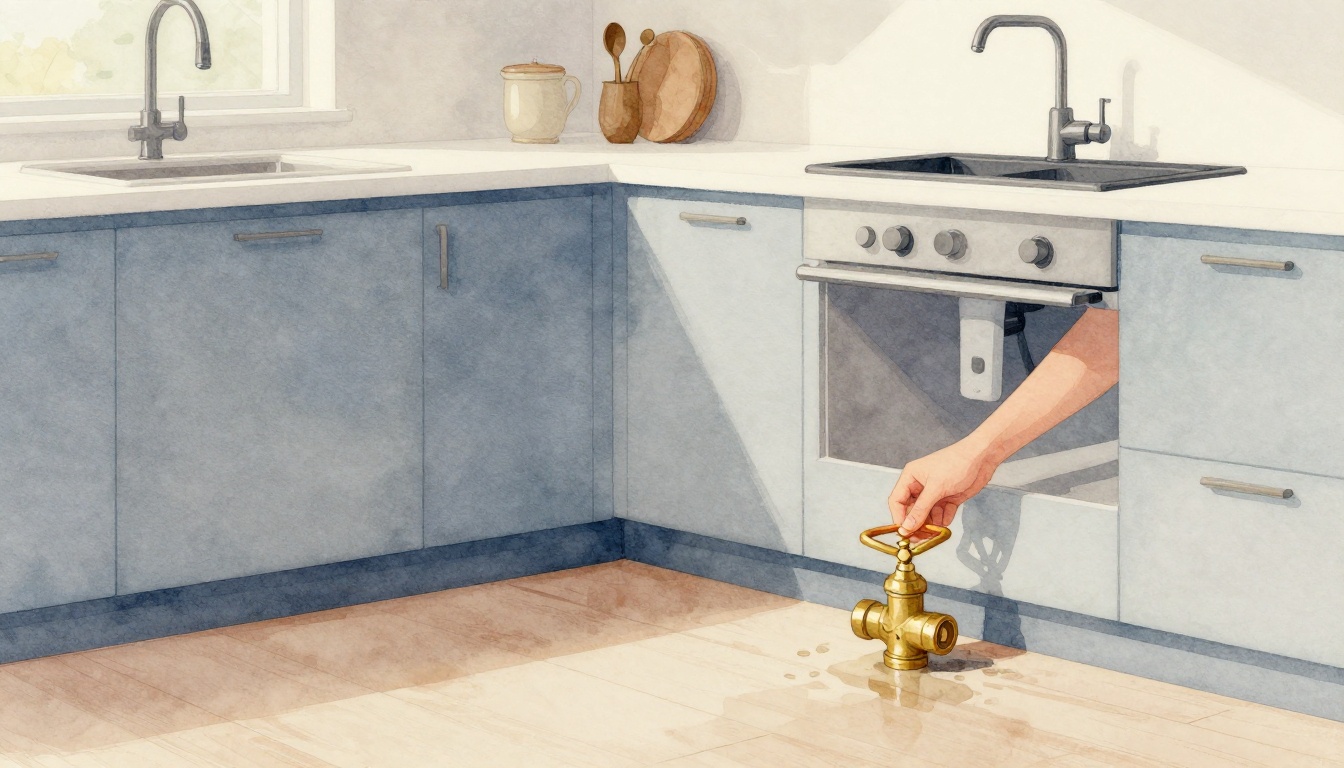
Picture this: you wake up at 2 a.m. to water gushing from a burst pipe in your kitchen. It leaks 5 to 12 gallons per minute. In minutes, hundreds of gallons flood your home. Damage costs average $3,867 to $4,500. You can stop it fast by shutting off the main water supply.
Pipes burst from freezes or wear. Leaks start small but grow. Knowing your valve location saves your floors, walls, and wallet. This guide shows you where to find it by home type. Then it covers step-by-step shutoff. You’ll learn next steps, mistakes to skip, and safety tips. Read on. Act now to protect your home.
Locate Your Main Water Shutoff Valve Quickly by Home Type
Panic hits during floods. You waste time hunting. Find and label your valve today. It takes minutes but pays off big. Common spots vary by home setup. Most valves sit near water entry points.
Gate valves have a big wheel you turn clockwise. Ball valves use a lever you flip perpendicular to the pipe. Test yours yearly. Turn it off and on gently. Label the spot with tape or a photo.
For more spots tailored to your setup, check The Spruce’s detailed breakdown.
Single-Family Homes with Basements or Garages
These offer easy indoor access. Head to the basement first. Look near the front wall by the water meter. Or check beside the water heater. Keep boxes away for quick reach.
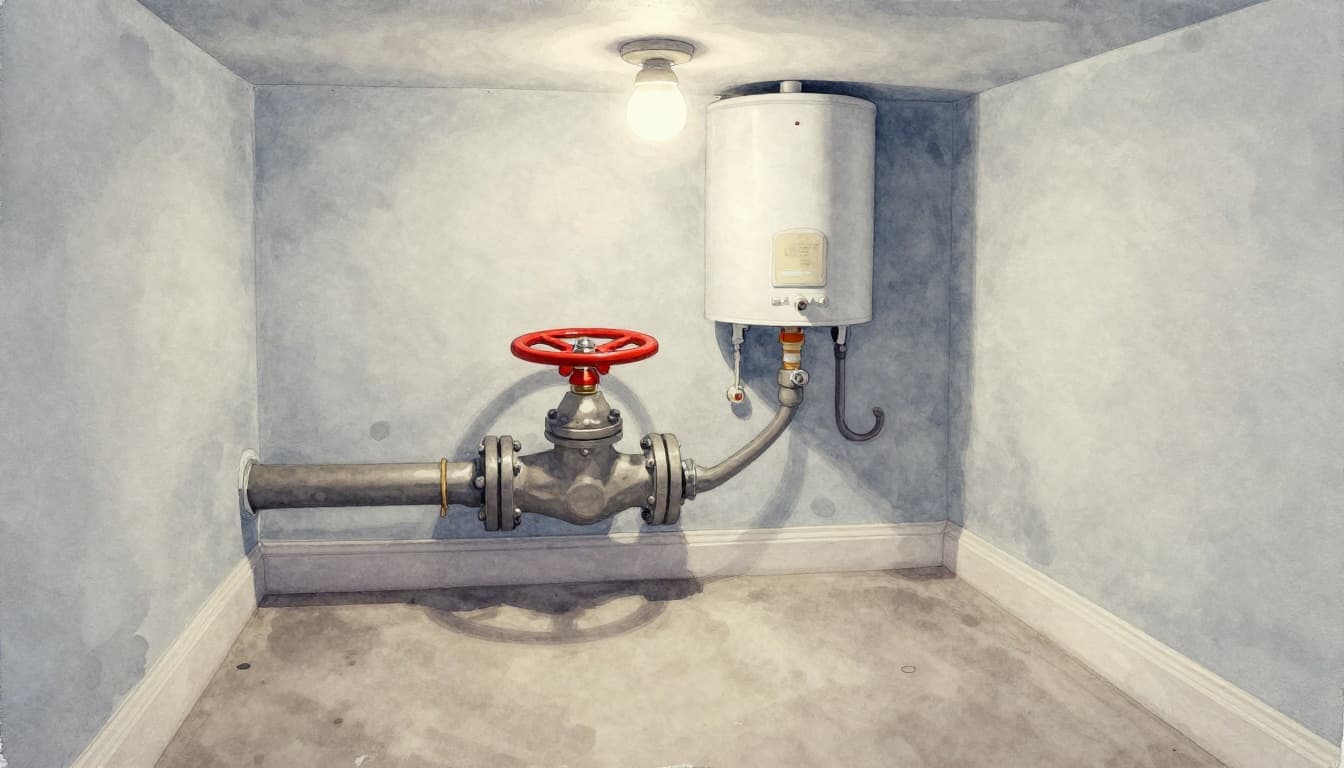
Garages work too. Scan the front wall near the entry pipe. Gloves help in dust. Clear paths now. You’ll thank yourself later.
Slab Homes, Apartments, and Older Houses
Slab foundations lack basements. Check the garage on the front wall. Utility closets near the front also hide valves. Crawl spaces count too, but they’re tight.
Apartments skip main valves often. Use local shutoffs behind toilets or sinks first. Call your landlord fast. Street meters serve as backup in the front yard.
Older or manufactured homes vary. Peek in garages or under the house. Street meters help if indoors fail. Lift the green box cover. Use a wrench or meter key to turn clockwise.
Shut Off the Water Step by Step Without Damaging Anything
Safety comes first. Kill power to the water heater if you can reach it safely. Grab gloves and a towel. Clear the area around the valve.
Follow these steps. Stay calm. Move quick but careful.
- Find the valve. Use your label or memory.
- Turn the gate valve clockwise. Give it 5 to 8 snug turns. Stop when tight. Don’t force it.
- For ball valves, flip the lever perpendicular to the pipe. Think light switch off.
- Relieve pressure. Open the lowest faucet until water runs dry.
- Check for flow. Flush a sink upstairs. No drip means success.
The lever acts like a gate. Parallel means on. Across shuts it down.
If stuck, don’t muscle it. See the next section.
Handling Gate Valves and Ball Valves
Gate valves rule older homes. Turn the wheel righty-tighty. Clockwise seals it. Newer spots use ball valves. Quarter-turn the blue or red handle. Perpendicular position cuts flow.
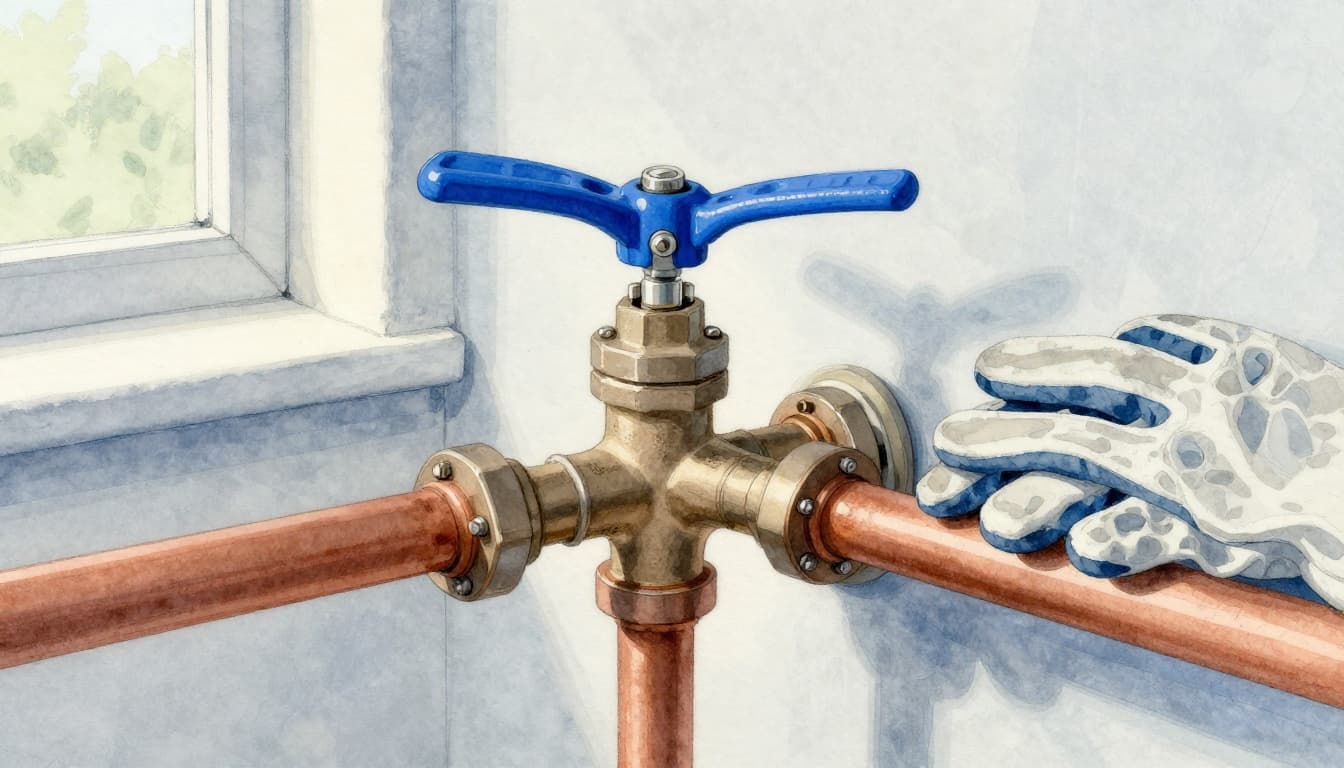
Ball valves shine in emergencies. They turn easy. Gate ones need more spins but work fine.
Dealing with Stuck or Tricky Valves
Rust binds them over time. Slip on gloves. Use an adjustable wrench if needed. Turn slow and steady.
It won’t budge? Skip to the street meter. Call a plumber after. Forcing breaks pipes worse.
What to Do Right After and Mistakes That Flood Your Home Worse
Water stops. Act fast to limit harm. Grab buckets for drips. Towels soak puddles. Shut off the water heater breaker. Power prevents shocks.
Call a plumber now. Don’t restart water yourself. They’ll check lines first.
Reopen later slow. Flush faucets to clear air. See Paul Davis tips on post-shutoff care.
Skip these errors. They turn leaks into disasters.
Quick Actions to Limit Damage Post-Shutoff
Place buckets under active leaks. Unplug appliances in wet spots. Call pros while drying floors.
Turn heaters back on only after repairs. Document damage for insurance.
Top Mistakes Homeowners Make and How to Dodge Them
Over-tighten valves. It strips threads. Turn snug only.
Forget to drain pressure. Water stays trapped. Always open faucets.
Ignore local shutoffs first. They work faster in apartments.
Skip yearly tests. Valves seize without use. Check now.
Force stuck ones. Grab a pro instead.
Prep tools ahead. Wrench, gloves, meter key, towels. Shut electric panels if floods rise. Apartments, post numbers by phones.
Ready to Stop Floods Fast
You know where to find your valve. You can shut it off right. Aftercare keeps damage low.
Hunt yours today. Test the turn. Snap a photo. Pin it on the fridge.
Share this with neighbors. Check yearly. You’re set to handle shut off water supply emergency calls.
What spot hides your valve? Pin it now. Stay dry.