
You wake up to a bedroom door that rubs the frame and pops open. Or your front door lets in cold drafts because it won’t latch. These issues frustrate millions of homeowners each year. Houses settle from freeze-thaw cycles, especially in March 2026 with shifting weather. Humidity swells wood too.
Most problems stem from simple wear. You can diagnose and fix them yourself. This guide shows quick checks, step-by-step repairs for top causes, tools to grab, and when to call help. Save time and cash with easy steps anyone can follow.
Start by pinpointing the issue. That leads to the right fix.
Pinpoint Why Your Door Is Acting Up
Doors act up for clear reasons. First, check without tools. Look at gaps around all edges. They should measure about 1/8 inch evenly. Bigger or uneven gaps point to frame shifts or bad hinges.
Next, swing the door a few times. Does it sag and hit the top corner of the frame? Feel for spots where it sticks or drags. Close it and listen for the latch. No solid click means strike plate trouble. Inspect edges for moisture signs too. Worn weatherstripping lets drafts sneak in.
House settling causes many woes right now. Freeze-thaw in early spring twists frames. High humidity from recent rains swells doors. Match these signs to causes below. Then pick your repair.
For more on common door issues, check Engineer Fix’s guide to door closing problems.
Signs of Loose or Worn Hinges
Loose hinges make doors sag. The top rubs the frame first. You might feel screws wiggle when you push the door.
Test it quick. Open the door halfway. Lift the bottom corner by hand. If it rises easily, hinges need work. Rusty pins squeak too. Tighten screws with fingers first. They spin loose? Time for fixes.
This happens often on heavy doors. Weight pulls screws out over time.
Clues Your Frame Is Out of Alignment
Uneven gaps scream frame trouble. Measure from top hinge to frame. Then bottom hinge. Big differences mean the frame twists.
Grab a level next. Place it on the door edge when closed. Bubble off-center? Frame sits crooked. Doors bind on one side as a result.
Settling soil shifts foundations. That racks frames slowly.
Hints of Warping or Sticking from Moisture
Doors swell in humid weather. They rub mid-panel or bottom edge. Pencil marks show exact rub spots.
Check for water stains. Soft wood near bottom hints at leaks. In March 2026, spring humidity hits hard. Doors stick until they dry.
Feel the edges. Rough or bowed spots confirm warp.
Problems with the Latch or Strike Plate
Latch misses the hole. You push hard, but it bounces back. No satisfying click follows.
Close the door slowly. See where latch hits. Off-center? Strike plate shifted. This fix stays simple most times.
Fix It Yourself: Step-by-Step Repairs for Smooth Closing
You diagnosed the issue. Now repair it. Prop the door open for safety. Work in good light. Test close after each step. Grab tools per section. Most jobs take under an hour.
Speak from experience. These steps work on interior and exterior doors. 2026 trends include quick-dry fillers and no-drill seals. They make fixes faster.
Safety first. Wear gloves. Unplug power if near wiring.
Tighten and Shim Loose Hinges Fast
Loose hinges top the list. Start here.
- Tighten all screws. Use a screwdriver. Go firm but not strip.
- Fill stripped holes. Bundle three toothpicks. Dip in wood glue. Tap into hole. Snap off excess. Screw in.
- Or swap for longer screws. They grab fresh wood.
- Sand rust off pins. Spray WD-40. Wipe clean.
- Shim if needed. Cut cardboard thin. Slide behind hinge leaf. Screw down.
Tools: Screwdriver set, pliers, toothpicks, glue, sandpaper, lubricant.
Test swing. Lifts easy now? Done. Heavy doors might need pro help.
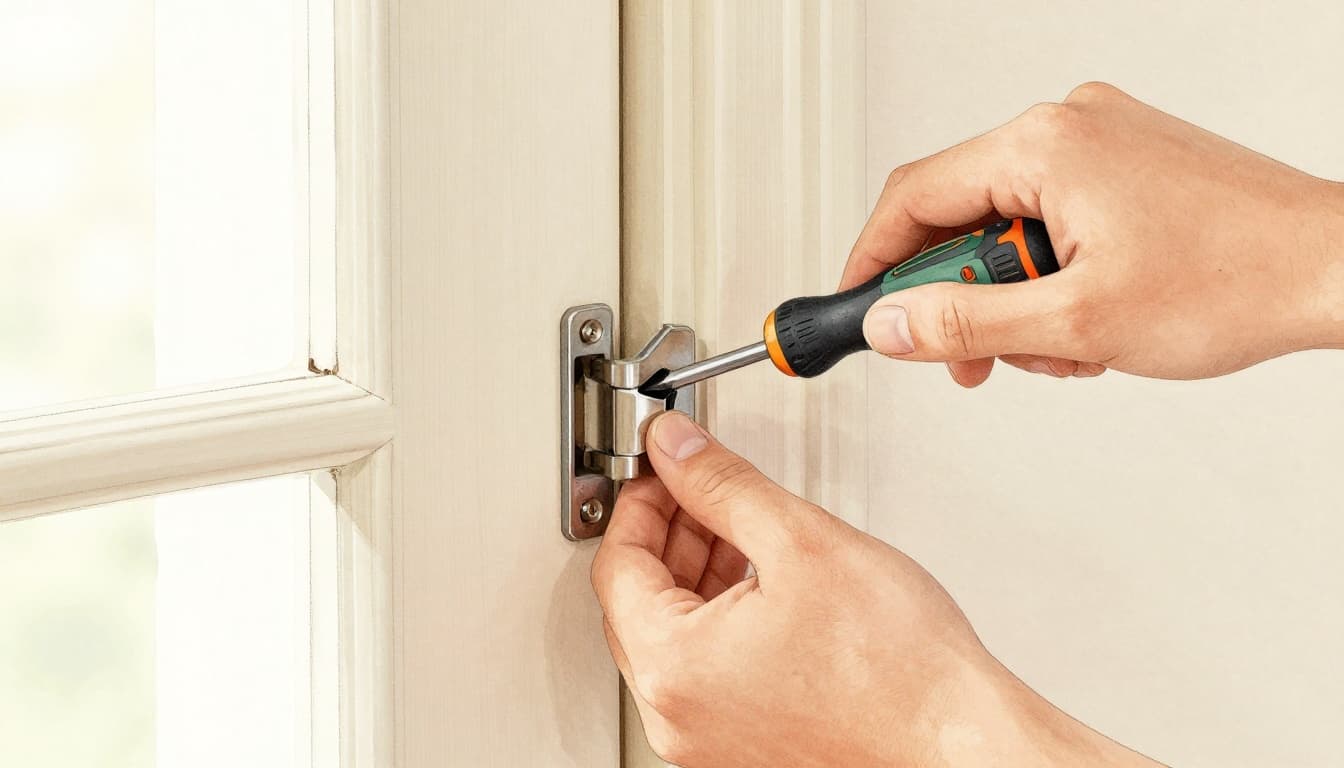
New self-adjusting shims twist in place. They save time.
Realign a Crooked Door Frame
Crooked frames need leveling. Patience pays off.
- Remove door if possible. Unscrew hinges top to bottom.
- Check frame with level. Vertical and horizontal.
- Tap shims behind hinge side. Wood or plastic wedges work. Hammer gentle.
- Rehang door. Adjust until gaps even.
- Screw tight. Test close.
Tools: Level, hammer, shims, pry bar, screwdriver.
Self-adjusting hinge shims trend in 2026. They expand with a tool. No hammer mess.
Frames shift from settling. Fixes hold years.
Sand Away Warping and Sticking Spots
Warped doors rub from moisture. Dry first.
- Mark rub spots with pencil. Close door. Rub opens.
- Sand high spots. Start coarse grit. Finish fine.
- Plane stubborn edges. Light passes only.
- Seal wood. Brush varnish. Blocks future swell.
- Run dehumidifier nearby.
Tools: Sandpaper set, hand plane, pencil, sealant.
Humidity drops in drier weeks. Doors smooth out. Quick-dry fillers patch dents too.
Align Latch and Strike Plate with the Lipstick Trick
Latch woes fix easy. Old trick shines.
- Rub lipstick on latch bevel. Red shows best.
- Close door firm. Mark transfers to plate.
- File strike hole deeper. Match mark.
- Or loosen screws. Shift plate 1/8 inch. Retighten.
- Chisel if needed. Clean shavings. Lube latch.
Tools: Lipstick, file, chisel, screwdriver, lubricant.
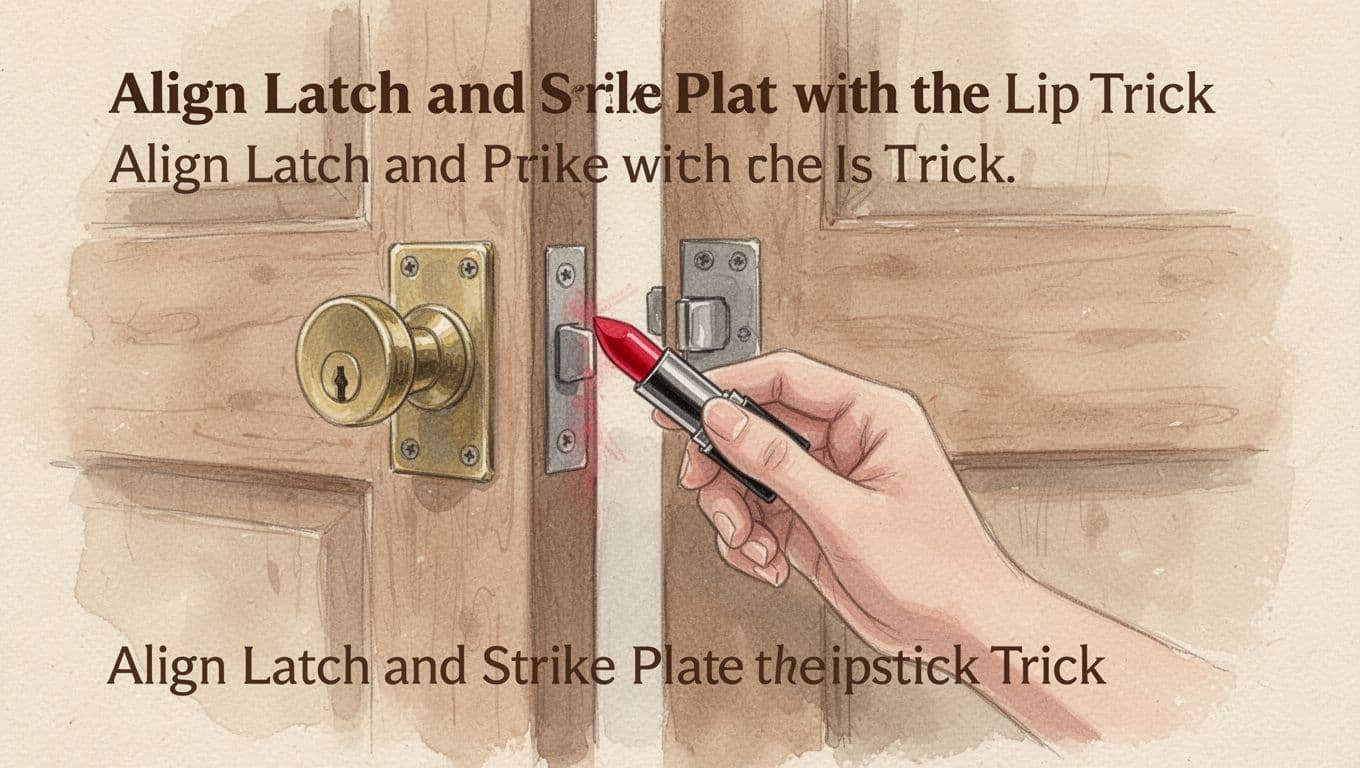
3D-printed custom plates fit perfect. Order online for odd sizes.
Refresh Weatherstripping for Draft-Free Seals
Worn strips leak air. Swap them.
- Peel old strips off. Pull slow.
- Clean frame. Wipe residue.
- Cut new foam or rubber to fit.
- Press adhesive side down. Trim ends.
- Test seal. No light gaps.
Tools: Utility knife, adhesive kit.
No-drill tape sticks fast. 2026 seal kits cut energy bills. For details on repair kits, see this Home Depot Qwik-Fix option.
Grab These Tools and Know When to Call a Pro
Stock basics for door jobs. They cost little. Reuse often.
| Tool | Use | Why It Helps |
|---|---|---|
| Screwdriver set | Tighten hinges, plates | Phillips and flat head cover most. |
| Level (2-foot) | Check alignment | Bubble shows true. |
| Hammer | Tap shims | Light rubber face avoids dents. |
| Wood shims | Frame support | Thin plastic lasts outdoors. |
| Sandpaper (assorted grit) | Smooth rubs | Coarse to fine progression. |
| File or chisel | Adjust strike | Sharp edges precise. |
| Lubricant spray | Hinges, latch | WD-40 quiets squeaks. |
| Weatherstrip kit | Seal gaps | Foam or rubber self-stick. |
Pro signs: Door too heavy to lift. Foundation cracks show. Multiple doors fail. Locks damaged. Severe warp won’t sand. Call then. Save on simple fixes yourself.
Smart lasers guide alignment via app. 2026 trend for pros and DIYers.
Smooth Doors Ahead
Most doors close right after one fix. Loose hinges or latch shifts cause 80 percent of trouble. Basic tools handle them in under an hour.
Try diagnosis today. Pick your repair. You’ll swing doors shut easy.
Share your win in comments. What fixed yours? Subscribe for home tips. Pin this for later.
Your home stays snug soon.